


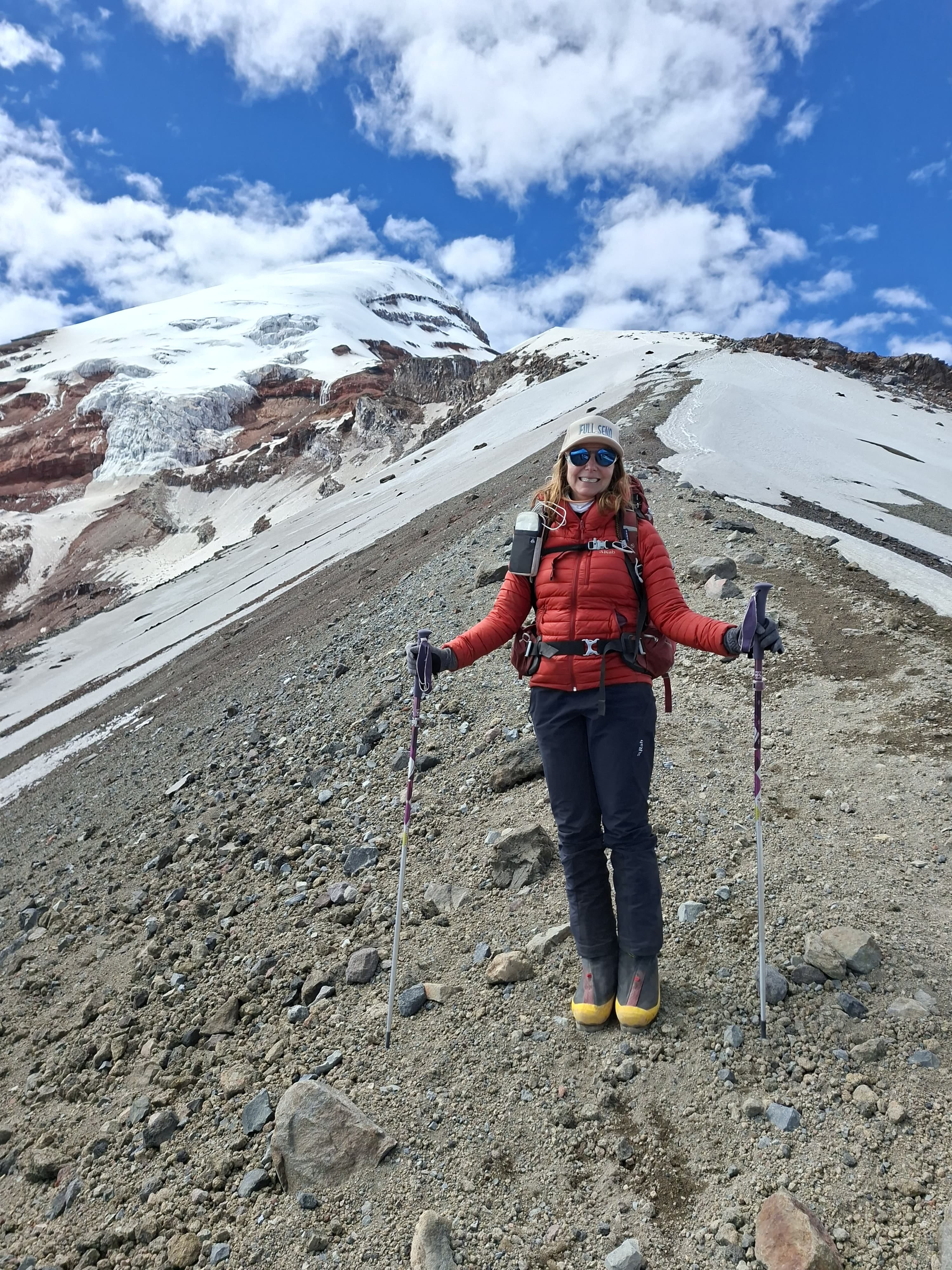
This past May, I climbed a 20,548-foot volcano in Ecuador — its summit the single farthest point on Earth from the planet's center, closer to the stars than any other place on the planet. The locals call it Taita Chimborazo — Father Chimborazo. I'd learned that before we started climbing, and I carried it with me in the dark.
At 4 a.m. on the west face, my body was done. Every step a negotiation. Somewhere in the dark, I hit a wall that had nothing to do with fitness.
I pushed through it anyway. I stood on top.
Standing there, I understood exactly why I'd thought of him. Fifty-one years of carrying someone you barely knew will do that — make you reach for him in the hardest moments, on a mountain named for fathers, on the other side of the world.
My father died when I was nine.
He was brilliant.
First in his family to go to college — came off a farm with a scholarship to Purdue, top of his ROTC class.
During the Vietnam War, the Army sent him to Fort Sill, Oklahoma, as an instructor, a forward observer training West Point men — never deployed himself, too valuable teaching other people’s sons.
Standard Oil paid for his MBA at Michigan State. He became president of Omega Oil Company, a division of Standard Oil Company, in his mid-thirties.
He loved the outdoors the way I love the outdoors — hunting, fishing, camping, moving through wild places as if he belonged there.
I have two memories of him. A ranch — fishing, the easy outdoor world he loved. And being in the jump seat of his Fiat convertible, top down, flying down Ohio country roads to the skeet range. He was in his happy place. I loved the speed, the sporting life, the cars. All of it.
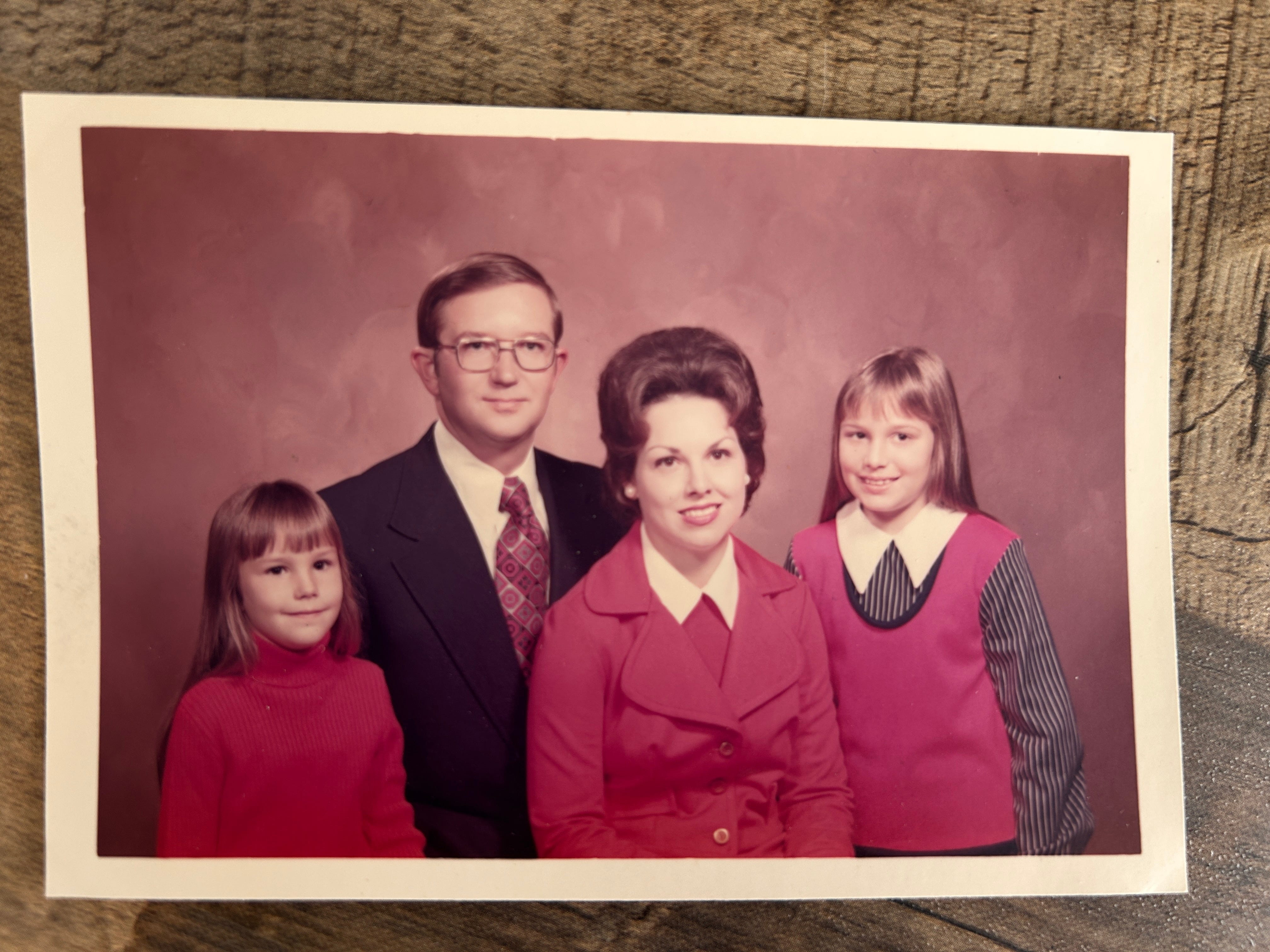
That’s it. That’s all I got.
He was also an alcoholic, and it cost my family everything it could cost — sixteen moves in nineteen years, a marriage that didn’t survive, a mother who held all of it together while he came apart. I didn’t know him long enough to reconcile the brilliance and the wreckage. I only got the two memories, and they’re good ones, and I’ve let them be enough for fifty-one years because the alternative was having nothing.
So I grew up figuring it out on my own. My mother hated speed, snakes, and heights. My dad, who was the adventurer, the risk-taker, the outdoorsman, was gone. No one to teach me how to take a risk. No one was there to teach me when I was safe. I learned competence before I learned either one, which turns out to be the wrong order. It works, but it has cost me a lot at times in my life.
On my fiftieth birthday, I went to Joshua Tree alone — just me, my dog Rosie, and my mountain bike. I’d been building a spiritual practice for years by then, deepening my connection to something larger than myself, and I chose to stay at the Institute of Mentalphysics — the Lloyd Wright-designed retreat center built on what its founder believes is an energy vortex in the high desert. People go there for personal insight. I went there for that too, though I didn’t fully know it yet.
On the first morning, I rode out to a remote stretch of land south of the park. Parked thinking no one knows I’m here. Started riding and something cracked open — the isolation, the vulnerability of it. I ended up in tears, turned around, and drove back inside the park.
I found a different trail and biked out to an overlook. Stopped on a plateau to give Rosie water.
As I sat there, I saw a man and a boy hiking toward me. As they got closer, I noticed the man’s easy, pleasant demeanor, and the boy seemed tentative and shy. They stopped, and we exchanged pleasantries. He told me he was a Big Brother — the boy didn’t have a father.
I felt mine right then. Clearly enough to stop me.
And what I received, four decades later, was a piece of backcountry wisdom dressed up as a gift: get outside, heal your soul, take care of yourself — but take the trail that’s traveled. If you don’t know, don’t go alone with no backup. Not a warning. A father’s gift to his daughter, the kind he hands her before she goes out into the world. I just had to wait until the desert gave it to me.
I hadn’t felt his presence like that since.
Until Chimborazo.
The Andes have their own version of Joshua Tree’s vortex — Cotopaxi and Chimborazo are both considered sacred by the people who live in their shadow, mountains with names, spirits, and relationships to each other. I didn’t choose them because of that. But I keep finding myself, on the birthdays that matter, in places that were built — by nature or by people — to crack something open.
Taita Chimborazo. Father Chimborazo.
What Joshua Tree gave me at fifty was a father’s first gift: not fear, but judgment. Adventure requires a plan, a backup, and the humility to know when you’re in over your head.
What Chimborazo gave me at sixty was the second.
Not caution. Courage.
The willingness to step into something hard and uncertain because the view from the other side might change you.
I couldn’t have said yes to the mountain without the desert first. I didn’t know that when I booked the trip. I know it now.
For most of my life, I thought risk was the lesson. Maybe that’s because I lost the person who might have taught me otherwise. So I learned by doing — sometimes brilliantly, sometimes expensively. I once bet nearly everything on a business with no second route down. It almost took me with it.
What I was missing wasn’t courage.
It was judgment.
Somewhere between Joshua Tree and Chimborazo, I think I finally got both.
And that’s what I keep coming back to on Father’s Day: if you didn’t get what you needed from your father — because he died, because he drank, because he simply wasn’t capable of giving it — it may still find you.
Not as a consolation prize.
As the real thing.
A stranger on a trail.
A mountain with his name on it.
Somewhere.
Maybe that’s what legacy really is. Not what someone managed to give you while they were here, but what keeps arriving long after they’re gone.
Sometimes a father’s gifts take fifty-one years to reach his daughter.
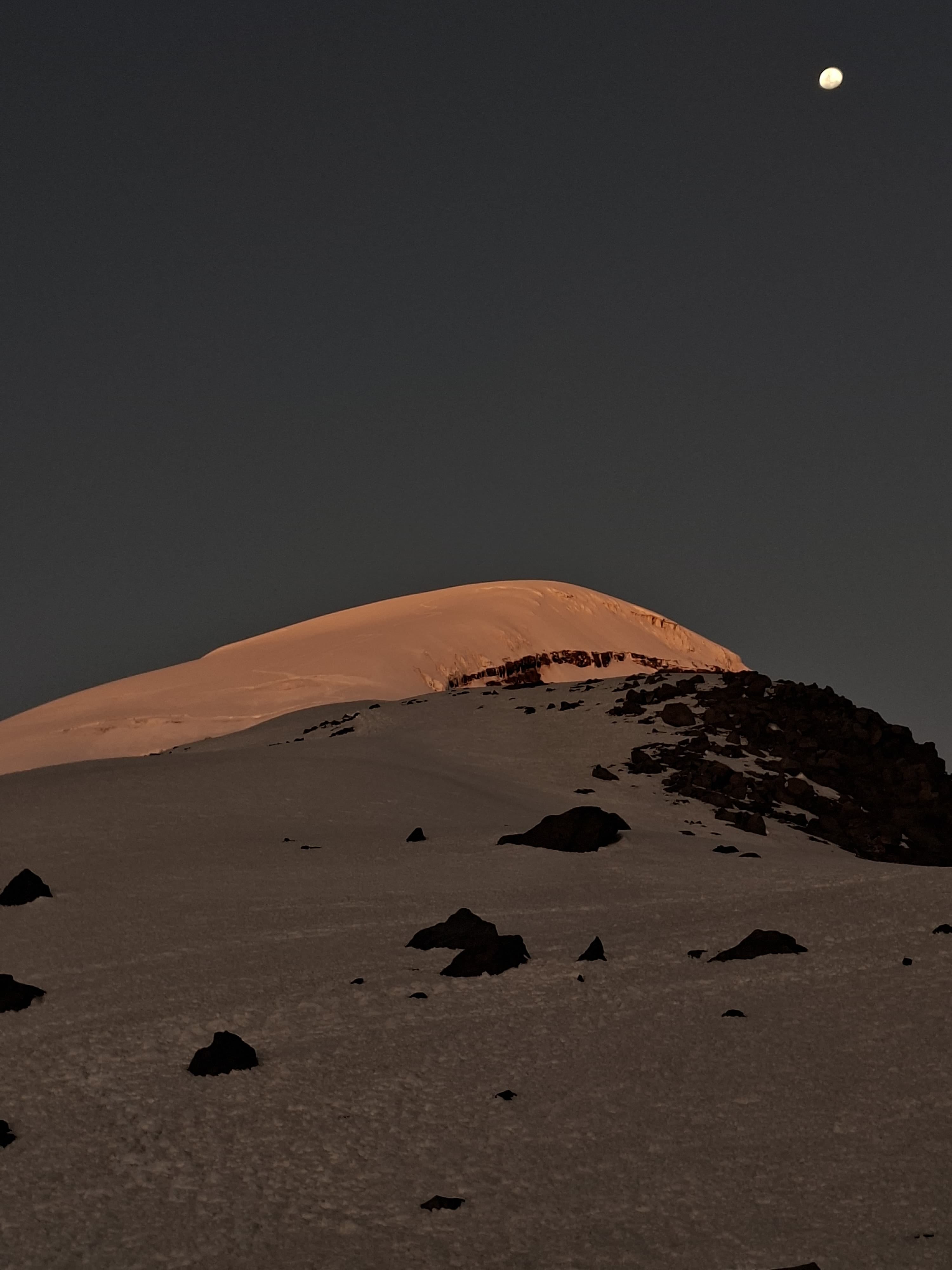
This post is part of my “Unsmallable 60 Project.” It’s my misogi, and let it be your permission slip.
Subscribe below — I want you here for all of it.
Whatever your edge looks like — the trip you haven’t booked, the conversation you haven’t had, the life you keep meaning to start — you’re not done.
Neither am I.
— Susan
“Maybe that’s what legacy really is. Not what someone managed to give you while they were here, but what keeps arriving long after they’re gone.”
Yes i love this!